


ICD-10 CM Codes 2023 Reference
4.04.00 Reviews
App Specs
- Version
- 3.1
- Updated On
- License
- Free
- Downloads
- 10,000+
- Developer
- treeinspired GmbH
- Categories
- Medical
- Platform
- Android
Screenshots
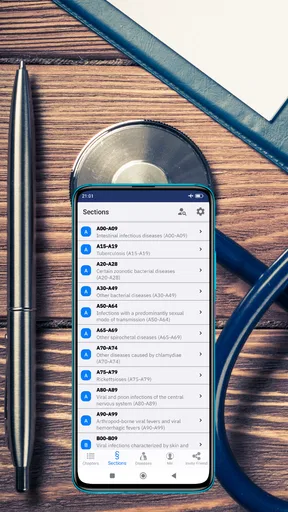
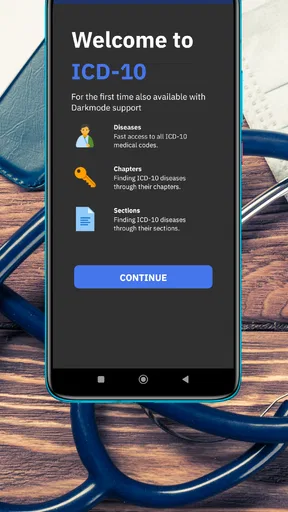
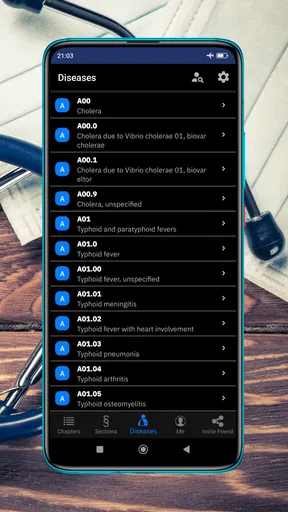
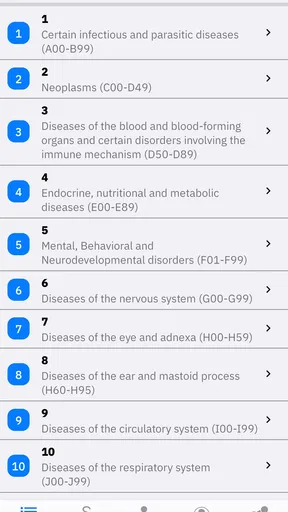
 Analysis by AppCompare
When I need to check a medical code quickly, I usually want something much simpler than a full clinical reference system. ICD-10 CM Codes 2023 Reference takes that focused approach: it is a medical app built around the 2023 ICD-10-CM code set, rather than a broad symptom checker, diagnosis tool, or patient-care platform. I found its value in the narrowness of that purpose. It is meant to help you look up and review coding information, not tell you what condition you have or replace professional judgement.
The app comes from treeinspired GmbH and is available free of charge, with optional purchases ranging from $3.99 to $25.99 per item. It is rated for Everyone, which makes the presentation approachable, although the subject itself is professional and should be handled carefully. Its store summary is extremely brief, so the real question is not whether the app sounds impressive, but whether a compact ICD-10-CM reference fits the way you work. In my experience, it can be useful for students, coding learners, healthcare workers, and anyone who regularly needs to verify a code without opening a much larger medical platform.
How the current reference feels in everyday use
The strongest part of this app is its clear identity. It is not trying to combine medication reminders, appointment booking, symptom analysis, medical news, and coding tools in one crowded package. The central task is consulting ICD-10-CM codes from the 2023 reference set. That focus matters when you are studying terminology, checking the general place of a code, or trying to refresh your memory during administrative work.
I would describe the experience as closer to a digital handbook than an interactive medical assistant. That distinction is important. A handbook helps you find and review information; it does not interpret a patient’s complete history, decide which diagnosis is appropriate, or confirm that documentation supports a particular billing choice. If you approach it with that limitation in mind, the app has a sensible role. If you expect a guided diagnostic workflow, you will probably find it too narrow.
A realistic use case would be a student reviewing a practice case at home. Instead of switching between several browser tabs, the student can use the app as a dedicated reference while comparing the wording in the case with the terminology in the code set. I also see a place for it in a small clinic or office where someone occasionally needs a quick reference but does not want a large subscription-based coding suite for infrequent lookups.
It can also help with repetition. Medical coding is full of similar-looking terms, related categories, and distinctions that are easy to blur together when you are learning. A reference app gives you a convenient way to pause, search, and compare what you remember with the official-style classification language. That makes it more useful as a study companion than as a one-tap answer machine.
What the 2023 focus means for the reader
The year in the title is not a minor detail. Coding systems change, and a reference centered on 2023 should be treated as a reference to that edition rather than an automatically current source for every later coding decision. For studying a 2023 curriculum, reviewing historical records, or understanding documentation from that period, the fixed edition can be an advantage. It gives you a stable target instead of changing content that makes it harder to follow a lesson or compare notes.
Worth Reading Before You Choose

EA SPORTS FC Mobile 26 Is a Bigger Football Game, but It Takes Time

Flipboard Shows What News Apps Must Do Beyond the Feed

Switching to Android Auto Means Rethinking Your Driving Routine

Google Calendar Makes a Crowded Week Easier to Manage

Ludo King Makes the Most of the Minutes Between Plans

Baby Panda World Brings Quick Play to Modern Phones, but Its Game Library Feels Busy
For current claims work, however, I would use more caution. A code that was appropriate for a particular year may not be the right choice for a later reporting period, and a reference app should not be the only checkpoint before submitting real medical billing. My practical advice is to use this app for orientation and lookup, then verify important decisions against the current official guidance, payer rules, institutional policy, or a qualified coding professional.
That is one of the app’s most important trade-offs: its narrow, fixed reference can make learning more manageable, while the same fixed focus can become a weakness when your work depends on the newest annual updates. It is especially suitable for learners who have been told to work with the 2023 edition. It is less suitable for an office that needs a continuously maintained, compliance-oriented system.
Development and the current version
The app was released on October 18, 2022, and its current version is 3.1. That release timing makes sense for a reference aimed at the 2023 code year: it arrived before the edition became the main point of study and use. I see the version history as evidence of a product that has received continued maintenance since its initial appearance, but I would not treat a version number alone as proof that every code-related rule or later annual revision is included.
For existing users, moving to version 3.1 should be understood primarily as staying with the maintained build of this reference, not as a promise of a completely different medical platform. The app’s basic purpose remains recognizable: quick access to ICD-10-CM material in a dedicated mobile format. That continuity is helpful if you already use it in a study routine, because you are not forced to relearn an entirely different type of tool.
The minimum operating-system requirement is Android 7.1. That is a relatively accessible requirement for people using older compatible devices, although device behavior can still vary depending on the phone, screen size, and system condition. I would install it on the device where I actually study or work, rather than assuming that an older phone will provide the same comfort as a newer, larger screen.
Its audience also appears to be growing gradually rather than being enormous: the app has passed ten thousand installs, with an average rating of four out of five from 56 ratings and four written reviews. I read that as a modest but useful signal. It suggests that people are finding value in the concept, but the small review sample means I would not use the rating as a substitute for checking whether the app matches my own workflow.
Where it helps students and occasional users
For a student, the best workflow is to use the app actively rather than passively. I would first read the case or lesson without searching, write down the code family or terminology I expect, and then use the reference to check my reasoning. That approach turns the app into a learning tool instead of a shortcut. It also exposes uncertainty: if several related entries appear plausible, that is a signal to review the documentation and coding guidelines rather than simply choosing the first result.
Another useful habit is to keep a separate study list of confusing terms. The app can serve as the lookup point while your notes capture why two entries differ, what wording led you to one category, or which detail in a case changed the answer. This is a more advanced use than simply searching a phrase, and it is where a compact reference can become genuinely valuable over time.
Occasional users may appreciate the same simplicity. Suppose you are preparing a report, studying health administration, or reviewing older documentation and need to understand a code label. A dedicated reference may be faster than navigating a general medical website filled with unrelated content. The trade-off is that you need enough background to judge what you are reading. The app can show reference information, but it cannot know whether the source documentation is complete or whether a particular payer applies an additional rule.
I would also recommend using it before a meeting or study session, not during a rushed final decision. Looking up unfamiliar terminology in advance gives you time to compare related entries and consult a second source when necessary. That small change in timing reduces the temptation to treat the first matching phrase as the final answer.
Where it falls short compared with broader alternatives
The usual alternatives in this category are official coding resources, web-based references, textbooks, institutional systems, and larger professional coding platforms. Each has a different advantage. An official source is the better choice when accuracy, annual updates, tabular instructions, and formal guidance are central to the decision. A textbook may be better for learning the logic behind coding. A professional platform may offer stronger workflows for teams, auditing, documentation review, and current compliance needs.
This app’s advantage is convenience and concentration. It gives the phone a single-purpose reference role instead of making you search through a general medical app. Its weakness is the same concentration: it does not become a complete coding education system simply because it contains a code reference. If you need extensive explanations, case-based training, audit trails, or a current professional database, I would choose a more specialized alternative and keep this app as a supplementary lookup tool.
There is also a risk of false confidence. Medical code descriptions can look precise even when the real coding decision depends on clinical documentation, sequencing, inclusion and exclusion guidance, or the reporting context. I would never use the app as a diagnosis engine, and I would not advise a patient to infer a medical condition from a code alone. The safest role is reference, study, and terminology orientation.
Cost makes the decision slightly more nuanced. The app itself is free, which lowers the barrier to trying it, while optional purchases from $3.99 to $25.99 per item mean that users should consider what they actually need before paying for anything extra. I would begin with the free experience and judge whether it fits my lookup habits. Someone who only needs occasional confirmation may not need an expanded purchase, while a frequent learner may decide that additional access is worthwhile if it improves regular study.
Practical limitations to keep in mind
The first limitation is the 2023 boundary. Even if the app remains useful, it should not be assumed to represent later code years. Before relying on an entry for current work, I would check the applicable year and compare the result with an up-to-date source. This is not unnecessary caution; annual classification changes can matter even when a term appears familiar.
The second limitation is context. A code list is not the same thing as coding advice. Beginners may need explanations that connect the code to documentation requirements, while experienced professionals may need tools for current rules and workflow integration. This app is more comfortable in the middle: it can support a person who already has some direction, but it is not a replacement for training or professional review.
The third limitation is the small amount of public feedback. A four-point average is encouraging, but it comes from a limited pool rather than a broad consensus. I would therefore test the app with the exact terms I commonly encounter. Check a few straightforward entries, then try related or easily confused terminology. That quick personal test tells you more than the rating alone about whether the reference suits your needs.
There is also a workflow limitation that is easy to overlook: a mobile reference is convenient only when the phone is convenient. For long study sessions, a larger screen, printed manual, or desktop reference may be easier on the eyes and better for comparing multiple pieces of guidance. I would use the app for short checks and revision, then move to a fuller source when I need to examine a complex case carefully.
What I would watch as the app evolves
The most meaningful future improvement would be clear handling of newer code editions while preserving access to the 2023 material. That would help users who study historical content and users who need current references without forcing them into separate tools. I would also look for changes that make it easier to distinguish a simple code lookup from the broader guidance needed for a real billing decision.
For existing users, the key question is not whether every update adds a flashy feature. It is whether maintenance keeps the reference dependable, the edition clearly identified, and the lookup process comfortable on supported devices. A medical reference benefits more from clarity and careful upkeep than from unnecessary extras.
Before installing, I would ask myself four practical questions. Am I studying or working specifically with the 2023 ICD-10-CM edition? Do I need a reference rather than a diagnostic or billing platform? Am I comfortable verifying important decisions elsewhere? And will a phone-based tool be convenient for the length of my sessions? If the answers are mostly yes, the app is easy to justify as a lightweight companion.
I would skip it if I need a continuously current professional coding environment, detailed instructional explanations, or a system that evaluates documentation and compliance. In those situations, an official current source, a structured training resource, or a professional coding service is the better investment. Installing this app will not solve those needs, and expecting it to do so would create more frustration than value.
My final view
After looking at its purpose, release history, current version, pricing model, and practical role, I see ICD-10 CM Codes 2023 Reference as a focused tool rather than a complete medical solution. Its real strength is giving a learner or occasional user a dedicated place to review 2023 ICD-10-CM terminology without the distraction of a broader health platform. That is a modest goal, but a useful one when it matches the task.
I would recommend it to students, healthcare administration learners, and professionals who need a convenient secondary reference for the 2023 edition. I would use it alongside official guidance for important decisions, especially when documentation, payer requirements, or a newer coding year is involved. The free entry point makes trying it straightforward, while the optional purchases mean I would evaluate the basic workflow before spending anything.
My honest conclusion is that this app earns a place as a compact study and lookup companion, not as the final authority in a coding workflow. If you want a focused reference and understand its date-specific limits, it can save time and support better revision. If you need current, comprehensive, context-heavy coding support, choose a stronger primary resource and treat this one as an extra rather than the foundation.
Pros
- Covers the complete 2023 ICD-10-CM code set for quick reference.
- Useful for students
- coders
- clinicians
- and healthcare administration staff.
- Search tools make it easier to locate codes by term or code number.
- Provides a convenient offline reference for use without an internet connection.
- Compact format is more practical than carrying a printed coding manual.
Cons
- The 2023 edition may not reflect newer coding updates or guideline changes.
- It should not replace official coding guidelines or professional verification.
- Some entries may require clinical context to select the correct code.
- Small-screen navigation can be less comfortable for extended coding sessions.
- Features and organization may vary depending on the device or app version.
FAQs for ICD-10 CM Codes 2023 Reference
What is ICD-10 CM Codes 2023 Reference used for?
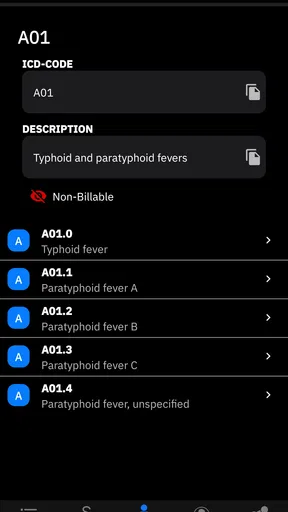
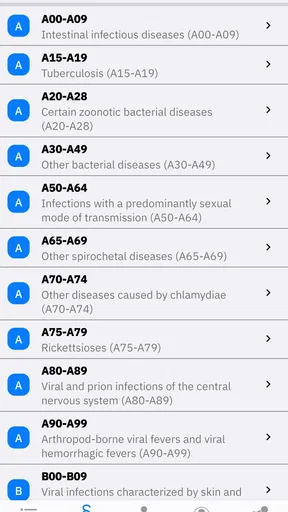
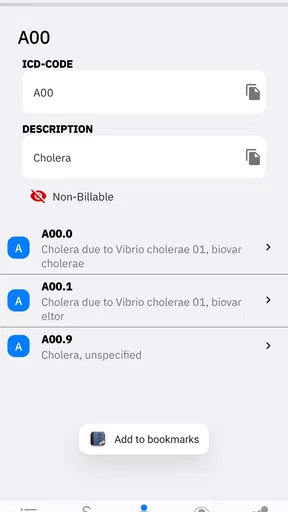
ICD-10 CM Codes 2023 Reference is designed to help healthcare professionals, medical students, coders, and researchers look up diagnosis codes from the 2023 edition of the International Classification of Diseases, Tenth Revision, Clinical Modification. After reviewing the app, its main purpose is quick reference: users can search or browse code listings, check descriptions, and consult classification details without carrying a printed coding manual.
Does the app include the complete 2023 ICD-10-CM code set?
The app is intended to provide access to the 2023 ICD-10-CM reference material, including code numbers and their corresponding descriptions. However, users should confirm the exact coverage in the app listing or within the application, because some reference apps may organize content differently or omit supplementary materials such as official coding guidelines, payer policies, clinical documentation advice, or specialty-specific coding notes. It should not automatically be treated as a complete coding manual.
Can ICD-10 CM Codes 2023 Reference be used without an internet connection?
Offline availability depends on how the application stores its reference database. Many code-reference apps download or include their core content so searches can be performed without continuous internet access, which is useful in clinics, classrooms, or locations with limited connectivity. Before relying on it offline, test searches in airplane mode and check whether updates, advertisements, linked resources, or certain features still require an active connection.
Is this app suitable for professional medical billing and coding?
The app can be a convenient secondary reference for checking code descriptions and locating possible diagnosis codes, but it should not replace official coding resources, certified training, organizational policies, or current payer requirements. Coding decisions require documentation review, sequencing knowledge, annual updates, and awareness of official guidelines. Professionals should also verify that the app’s 2023 content matches the required coding year and has not been confused with a newer or different ICD-10 modification.
Does the app provide medical advice or determine the correct diagnosis code automatically?
ICD-10 CM Codes 2023 Reference is primarily a lookup tool, not a diagnostic engine or substitute for a qualified healthcare professional. Finding a code in the database does not confirm that the diagnosis is clinically accurate, billable for a particular encounter, or supported by documentation. Users should interpret medical information responsibly, protect patient confidentiality, and consult clinicians, certified coders, or official guidance whenever a code selection is uncertain.


